Measure what your customers feel
We help CPG companies predict human sensory perception from lab measurements -- reducing reliance on costly consumer panels while maintaining scientific rigor. We design tests, build custom instruments, and deliver statistical models that connect lab data to real human experience.
How machines measure what you feel
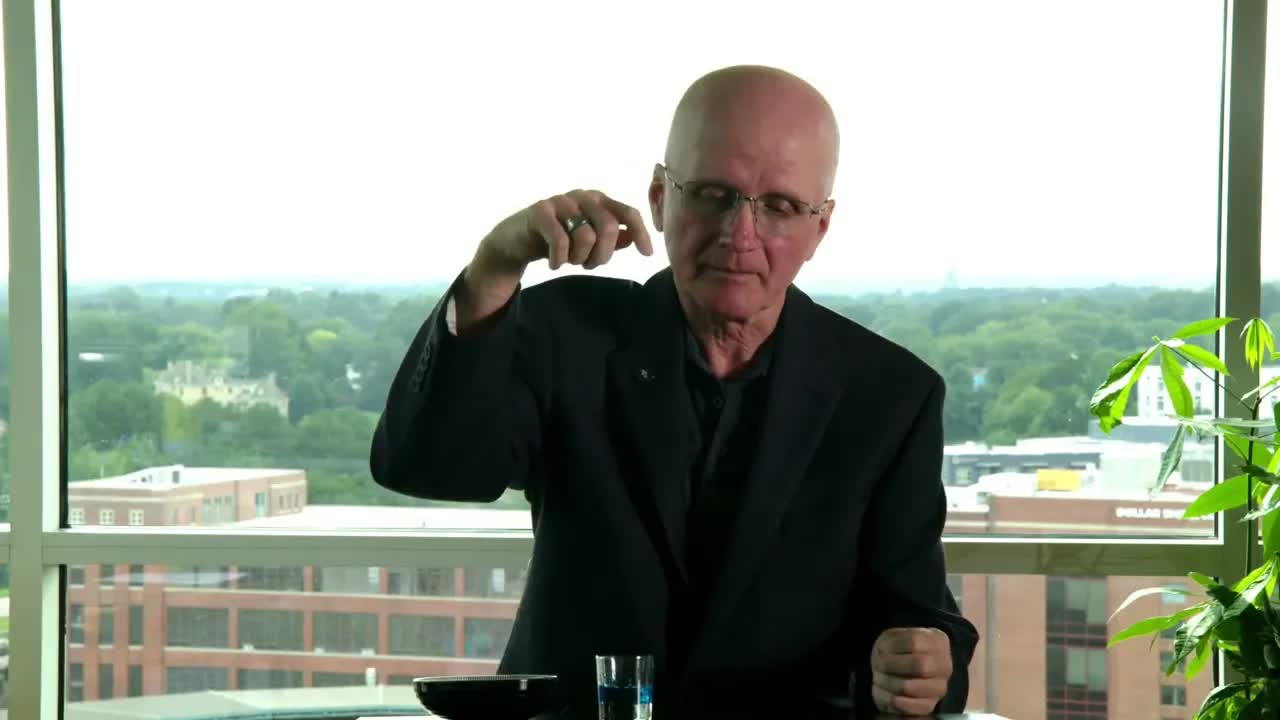
Chief Scientist Andrei Potanin explains how emulative instruments and tribology -- the science of friction -- replace expensive expert panels and home-use tests with fast, reliable measurements that mimic real human actions.
Read the transcript
Andrei Potanin: Hello, my name is Andrei Potanin. I am a chief scientist of a startup called Perception Instruments LLC. We developed this company in order to create instruments which can predict human perception of personal care products, such as toothpaste, skincare products, and things like that.
There are two types of instruments to do that. One instrument is a human itself, himself or herself, and usually this is the most reliable way of predicting human perception. Many companies rely on this. That can be expert panels, which are a number of humans get together, they are specifically trained to judge, for instance, stickiness or spreadability of a product, and they judge it on a scale of zero to ten, and those human panels are a very reliable test.
It also can be done by actual customers at home. This is your so-called home use test. Both are quite expensive and time-consuming, and therefore product developers always prefer instrumental measurements if they can have one. There are two types which they can potentially use.
The first is focused on material properties. They are measuring material properties such as viscosity, for instance. As a scientist, I prefer this approach because this is what you are taught how to measure at school. The problem with this is it doesn't quite account for the human mind, which can be sometimes very messy and mess different things together.
For instance, if you take that same viscosity, a human can test it by putting a finger into the cup with the liquid and see how hard it is to move, and from that conclude that this is more viscous than that. But it also can be done differently -- by pouring a liquid into a cup and looking at how it flows.
It turns out that in this case, perception of viscosity will be affected not only by viscosity as such, but also by the way it looks, its color, its transparency. There are multiple papers on this peculiar element of human perception, specifically about viscosity. But this is the same thing about other things too, not only viscosity.
That's why people developed what is called emulative measurements, which are emulating the actual human action. The most commonly used and popular workhorse in the industry is the texture analyzer, which is simply a very simple instrument going up and down with different attachments and measuring how it penetrates into something or how it separates from something.
The problem is that it's one-dimensional, and the second problem, it lacks a visual component -- it doesn't record the visual element of what is happening. That is why we created a number of emulative instruments and sold them, for instance, to Colgate, which were dealing with toothpaste in this case, because we were measuring stringiness of a toothpaste, how stringy it is when discharged.
It's an important property because it determines how messy it is. Or shape retention, because the paste should hold its shape on the brush. You can predict both from material properties -- there are ways to do that, they're quite complicated -- but this is much simpler, faster, and easier, and reliable because it's exactly what humans do.
Now we are moving to the next step that is called tribology. Tribology is the science of friction. There are tribometers; there are not a lot of them available commercially. But the problem is that they were not created for human action -- they don't account for the way humans do that. For instance, they were developed for testing lubricants in machinery, and not what a human would feel.
Therefore, their movement is very limited. Whereas, for instance, if you do it on skin -- talking about moisturizer or sunscreen -- humans would spread it on their skin, trying to push it into their skin, which is the purpose of all this. The tribometer cannot do that.
But we still can emulate this action and measure the coefficient of friction. The coefficient of friction has turned out to be very important because it predicts how well the product forms a protective film on the skin, and therefore it predicts not only how much a human likes it, but also how efficient it is in terms of health, because it prevents skin cancer after all. That's what this product is for in the first place.
So we have this on our webpage called perceptioninstruments.com. You are welcome to visit it and see how it works. And moreover, we can talk, and -- as opposed to most competitors -- we can actually modify our instruments to your specific needs and to your specific products.
So I hope to see you soon visiting our webpage. Thank you very much.
Predicting human perception from lab data
Human sensory panels are the gold standard -- but they are expensive, slow, and impractical for routine testing. We build the statistical bridge between lab instruments and human perception, so you can reserve panels for final validation.
Test design
We design emulative and tribo-rheological protocols calibrated to the sensory attributes your team cares about -- mouthfeel, spreadability, stringiness, shape retention, and more.
Custom instrument development
When no existing instrument captures what you need, we build one. Our devices are designed around specific sensory hypotheses, not general-purpose measurement.
Statistical modeling
We build regression and machine learning models that predict panel scores from instrument data -- validated against your existing sensory data or alongside a calibration panel study.
Panel cost reduction
Once predictive models are established, routine reformulation checks can be run entirely in the lab -- reserving expensive consumer panels for final validation only.
We interpret data from instruments you already have
If your lab already runs any of the following, we can build predictive models from your existing data -- no new equipment required to get started.
Viscometer
Flow resistance and apparent viscosity at defined shear rates.
e.g. Brookfield DV seriesRheometer
Full flow curve -- viscosity, viscoelasticity, yield stress, thixotropy.
e.g. TA Instruments DHR, Anton Paar MCRTribometer
Friction and lubrication -- closely linked to mouthfeel and skinfeel.
e.g. Mini-Traction MachineTexture analyzer
Force-displacement of solids and semi-solids. The closest standard emulative tool.
e.g. Stable Micro Systems TA.XTCustom devices we have built
We design and build bespoke emulative instruments to your brief -- each one starts with your product, your consumer, and the perception you want to predict.
Spreading tribometer
Replicates the physical act of spreading a paste or emulsion, measuring friction and lubrication under conditions that closely mirror finger or applicator contact.
Stringiness meter
Emulates the pull-away motion when a product is stretched or separated -- quantifying stringiness and cohesive stretch in sauces, cheeses, gels, and adhesives.
Shape retention meter
Measures the structural integrity of extruded or deposited products as consumers see them -- toothpaste on a brush, cream from a tube, gel from a nozzle.
Built by hand in our workshop
Every custom device is designed, machined, wired, and tested in our own workshop -- from raw parts on the bench to a working instrument.
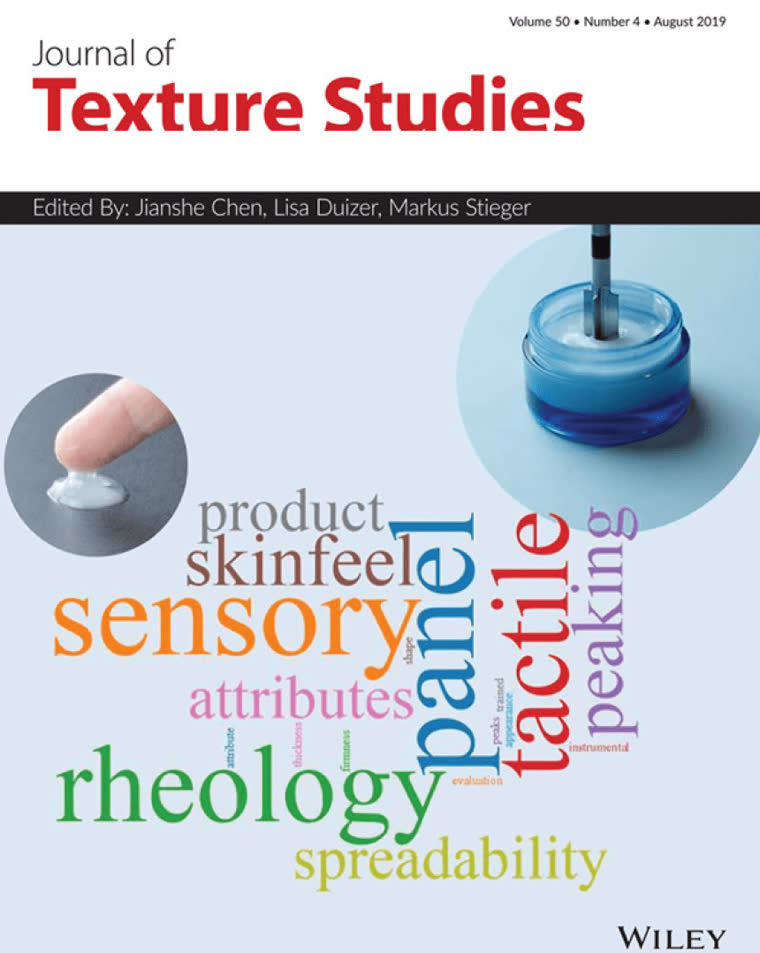 Journal of Texture Studies, Vol. 50, No. 4
Our methods are published in leading journals. Statistical relationships between lab measurements and human sensory scores -- validated across oral care, personal care, household, and food categories.
- Sunscreen sensory attribute prediction via textural, rheological and tribological testsInt. J. Cosmetic Science, 2026
- Prediction of tactile sensory attributes of facial moisturizers by rheology and tribologyBiotribology, 2021
- Psychophysical and rheological investigation of toothpaste tube squeezabilityJ. Texture Studies, 2024
Ready to measure what matters?
Bring one application: sunscreen spreadability, toothpaste squeezability, lotion after-feel, food mouthfeel, package dispensing, or another sensory attribute your panel can describe but your instruments cannot yet quantify.
Book a 30-min discovery call